Soju vs Sake vs Shochu:
The Difference in Ingredients and Making
The biggest difference is how they are made. Sake is brewed: rice, rice koji and water are fermented and then strained, with no distilling at all. Shochu and soju both belong to the distilled family. And although Japanese shochu and Korean soju share the same written characters, they are separate drinks, defined by the laws of two different countries.
I am a Korean who runs three Korean bars in Higashi-Shinsaibashi, Osaka, and this page sorts out the three names for visitors who keep seeing all of them on menus.
Soju vs sake vs shochu: the three drinks side by side
Here is the short version. The legal categories come from each country's liquor tax rules, so the table describes how the drinks are classified, not how they taste.
| Sake (Japan) | Shochu (Japan) | Soju (Korea) | |
|---|---|---|---|
| Type | Brewed | Distilled | Distilled |
| Main ingredients | Rice, rice koji and water | An alcohol-containing liquid; sweet potato, barley and rice are common base ingredients | Diluted soju: drinking-grade ethyl alcohol and water. Distilled soju: a fermented base containing starch or sugar |
| How it is made | Fermented, then strained; not distilled | Distilled, either in a continuous still or in another kind of still (a pot still) | Diluted soju: the alcohol is thinned with water. Distilled soju: fermented, then distilled |
| Legal category | Brewed liquors, under Japan's Liquor Tax Act | Distilled liquors, under Japan's Liquor Tax Act: continuous-still shochu and pot-still shochu | Distilled liquors (증류주류), under Korea's Liquor Tax Act: diluted soju (희석식) and distilled soju (증류식) |
| Legal alcohol limit | Under 22% | Continuous still: under 36%. Pot still: 45% or less | Not covered in this article |
If you want to know how strong a glass of soju usually is and how Koreans drink it, that is a separate topic, covered in our soju guide for first-timers. This page sticks to what the drinks are.
How Japan classifies sake and shochu
Japan's Liquor Tax Act sorts every alcoholic drink into four groups: sparkling, brewed, distilled and mixed. Sake and shochu land in different groups, which is the clearest way to tell them apart.
- Sake (seishu, also called nihonshu) is in the brewed group. In outline, the law describes it as rice, rice koji and water, fermented and then strained, at under 22% alcohol.
- Continuous-still shochu is made by running an alcoholic liquid through a continuous still, and must stay under 36% alcohol. It is commonly known as kōrui (type A) shochu.
- Pot-still shochu is distilled in any still other than a continuous one, and can go up to 45% alcohol. It is commonly known as otsurui (type B) shochu.
Both kinds of shochu sit in the distilled group. When a Japanese menu lists shochu by what it is made from, such as sweet potato, barley or rice, that tells you the base ingredient rather than the legal type.
What Korean soju is: diluted and distilled
Under Korea's Liquor Tax Act, soju (소주) belongs to the distilled liquors. The tax rules then separate it into two kinds:
- Diluted soju (희석식 소주, heuiseoksik): drinking-grade ethyl alcohol, known in Korean as 주정 (jujeong), thinned with water.
- Distilled soju (증류식 소주, jeungnyusik): a base containing starch or sugar is fermented and then distilled.
The everyday soju sold in green bottles is the diluted type. Distilled soju is the other branch of the same legal category.
Why the names get mixed up, and what to say when ordering
Written in kanji or hanja, Japanese shochu and Korean soju use the same two characters, 焼酎. In Japan, though, the word refers to Japanese shochu, so asking for "shochu" at a Japanese restaurant or izakaya will bring you a Japanese drink, not the Korean one you might have expected.
| The drink you have in mind | Say this | Where |
|---|---|---|
| Korean soju | "soju" (ソジュ) | In Japan |
| Korean soju | "soju" (소주) | In Korea |
| Japanese shochu | "shōchū" (焼酎); Koreans call it 쇼추 (syochu) | In Japan |
| Japanese sake | "nihonshu" (日本酒) | In Japan |
So the safe habit is simple: say "soju" when you want the Korean drink, and "nihonshu" when you want Japanese sake.
Drinking Korean soju in Osaka: our three bars
Our three Korean bars do not serve food, so have dinner first and come by for Korean drinks afterwards. What we pour is Korean: soju, makgeolli and somaek. The bars sit on upper floors of buildings in Higashi-Shinsaibashi 2-chome, within a short walk of each other, and you can get there on foot from Shinsaibashi Station or Namba Station. Korean staff work behind the bar and K-POP is on the speakers.
Every one of the three opens at 21:00 and closes at 05:00, every day of the year. No booking is needed, though you can call or send an Instagram DM if you would like to reserve or ask something first. We accept both credit cards and cash. You must be 20 or older to come in, and please do not drive after drinking. Google Maps rates every one of the three bars at 4.9. As of September 2026, HEAVEN had 2,844 reviews there, SARANG 678 and 韓国バーMOON 380.
| How you want your soju | Bar | The setting |
|---|---|---|
| With a microphone in your hand | HEAVEN | Karaoke, darts that cost nothing to play, smoking allowed inside |
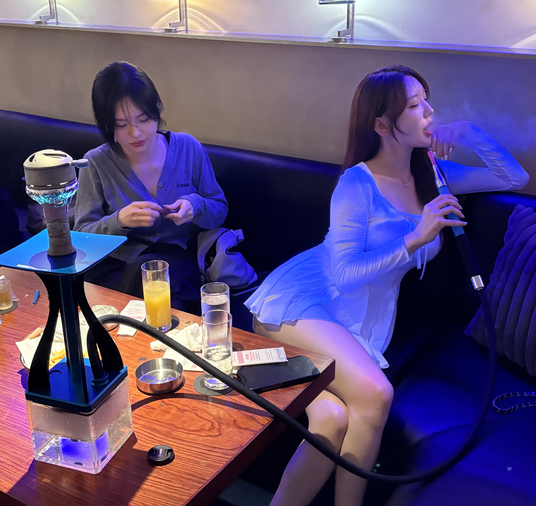
| Slowly, in a lounge seat | 韓国バーMOON | Lounge seats and shisha, with karaoke too; smoking allowed inside |
| Quietly, taking your time | SARANG | A quiet bar where you can drink alone at the counter; fully non-smoking, mostly counter seats, no karaoke |
Not sure which room suits your night? Try the bar chooser: a few quick questions and it suggests one of the three.
HEAVEN
Karaoke, free darts and smoking allowed inside; for soju with a song.
5F Galaxy Building No.3, 2-4-19 Higashi-Shinsaibashi, Chuo-ku, Osaka
Open in Google MapsMOON
Shisha and lounge seats, karaoke if you want it, smoking allowed inside; for a slow evening.
3F LUXE Building Naka Room, 2-8-6 Higashi-Shinsaibashi, Chuo-ku, Osaka
Open in Google MapsSARANG
Quiet, fully non-smoking, mostly counter seats and no karaoke; for unhurried soju, alone or with one friend.
Room 206, Gold Center Building, 2-8-12 Higashi-Shinsaibashi, Chuo-ku, Osaka
Open in Google Maps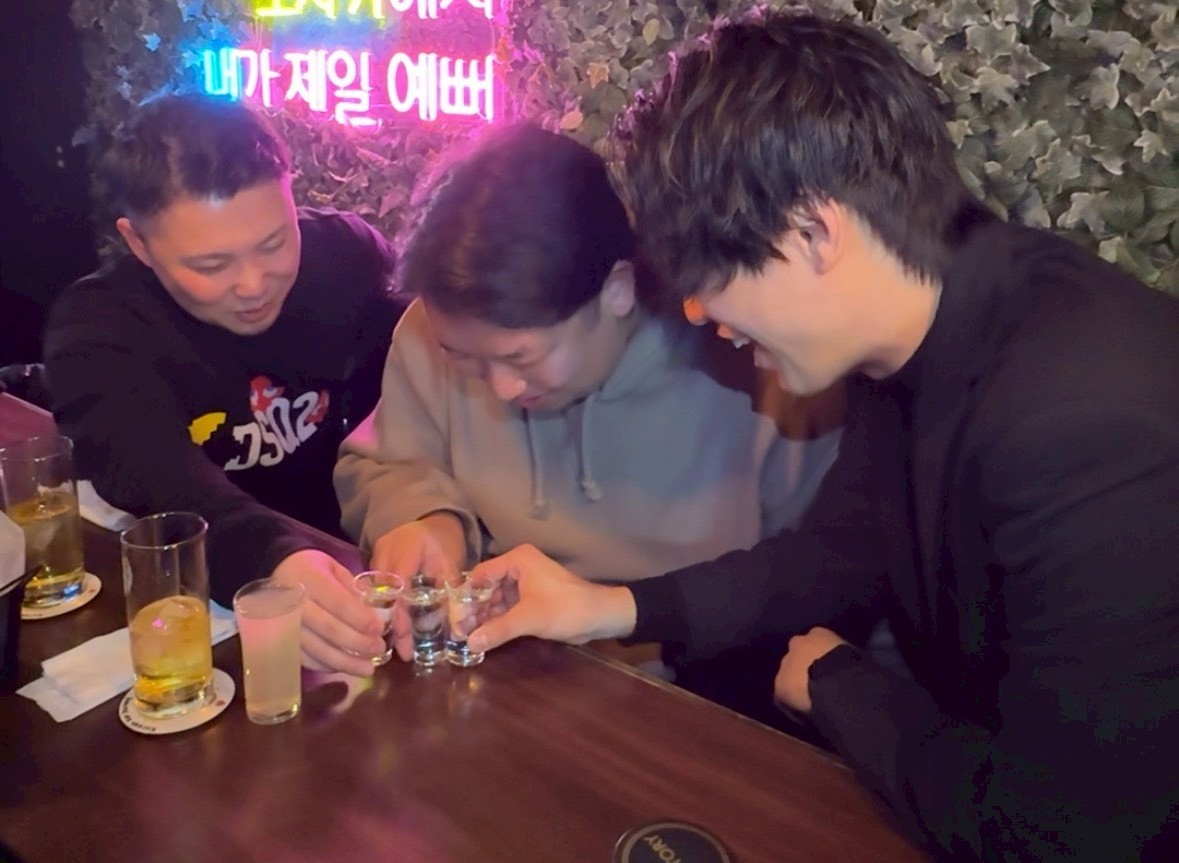
Soju, sake and shochu: FAQ
Q. Is soju the same as shochu?
No. They share the same written characters and both are distilled drinks, but Japanese shochu is defined by Japan's Liquor Tax Act and Korean soju by Korea's. They are two different drinks from two different countries.
Q. What is the difference between soju and sake?
Sake is brewed from rice, rice koji and water and is not distilled. Soju is classified as a distilled liquor in Korea. So the core difference is brewing versus distilling.
Q. What is the difference between sake and shochu?
Both are Japanese, but sake falls under brewed liquors and shochu under distilled liquors in Japan's Liquor Tax Act. The legal alcohol limits differ too: under 22% for sake, and under 36% or up to 45% for the two kinds of shochu.
Q. Is Korean diluted soju the same thing as Japanese kōrui (continuous-still) shochu?
The way each country splits its drink into two types looks similar on paper, but they are defined by separate laws in separate countries, so it is safer not to treat them as the same drink.
Q. Can I order Korean soju at a Japanese izakaya?
That varies from one izakaya to the next. Ask for "soju" rather than "shochu", since the second word will get you Japanese shochu.
Q. Can I come in if I am under 20?
No. Everyone entering our bars must be 20 or older.
Q. What time are your bars open?
From 21:00 until 05:00 the next morning, every day, with no days off.
Q. Should I reserve a seat?
You don't have to; just walk in. If you prefer to reserve or have a question, phone the bar or message us on Instagram.
Japan: National Tax Agency, "Sake no Shiori" (2024 edition), classification and definitions of alcoholic beverages under the Liquor Tax Act (checked on 7 November 2026). Korea: Korea Law Information Center (law.go.kr), Liquor Tax Act (주세법) and related National Tax Service administrative rules (checked on 7 November 2026). Bar information comes from our own official details; ratings and review counts are from Google Maps (as of September 2026).