Bonenkai:
Japan's Year-End Party Culture, Explained
What is a bonenkai? A bonenkai (忘年会) is a year-end drinking party that a workplace or a group of friends holds toward the close of the year, mainly in December. The word is used in the sense of leaving the year’s troubles behind. The evening opens with a toast, kanpai, and after the first venue anyone who wants to carry on moves to a second place, the nijikai. When the same kind of gathering happens after New Year, it is called a shinnenkai (新年会) instead.
I am Korean and run three Korean bars in Higashi-Shinsaibashi, Osaka. Below is how a bonenkai night is put together, the handful of Japanese words that come up, what is worth knowing if you are the guest, and a second-round option in Osaka at the end.
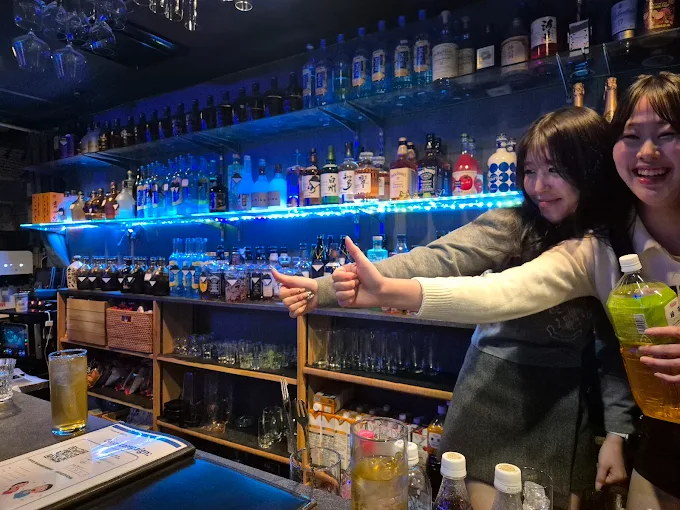
What happens at a bonenkai, step by step
No two groups run the evening in exactly the same way, so take this as the outline that a bonenkai can follow rather than a fixed programme.
- The kanpai. Once everyone has a glass, one person is asked to say a few words and lead the toast. Choosing who that person is falls to the organiser.
- The first party (一次会, ichijikai). This is the main sitting at the first venue. One format puts a meal at the centre of it.
- The close of the first party. Someone gives a closing address, and the party can end with a hand-clap in unison called tejime. Ippon-jime and sanbon-jime are two forms of it; ippon-jime is one of the closes you may see at the end of a first party.
- The nijikai (二次会). Those who want to keep going move to another place together. The second round can be treated as optional, so people who need to head home leave at this point.
Holding all of this together is the kanji (幹事), the organiser. The kanji gathers dates and head counts, books the venue, decides who gives the toast and the closing words on the night, and collects the money at the end.
Words to know before a year-end party
| Japanese | Reading | What it means at the party |
|---|---|---|
| 忘年会 | bonenkai | The year-end drinking party itself |
| 新年会 | shinnenkai | The same kind of gathering, held once the new year has begun |
| 一次会 | ichijikai | The first party, at the first venue |
| 二次会 | nijikai | The second round at another place, for those who want to stay out |
| 幹事 | kanji | The organiser: dates, numbers, booking, running the night, the bill |
| 乾杯 | kanpai | The toast that opens the drinking; you say it as you raise your glass |
| お疲れさま(です) | otsukaresama (desu) | “Thanks for all your hard work”; a phrase you can use as you raise a glass or say goodbye |
| 手締め / 一本締め | tejime / ippon-jime | A closing hand-clap done together; ippon-jime is one form of it |
If Korean drinking culture is more familiar to you, the Korean word for a year-end gathering is 송년회 (songnyeonhoe), a workplace drinking night is 회식 (hoesik), and rounds are counted 1차, 2차, 3차 as the group moves from one place to the next. The toast speech in Korean is called 건배사 (geonbaesa).
If you are invited to a bonenkai
Each workplace and each group of friends sets its own style, so treat these as general pointers rather than rules you will be judged on.
- Hold your first sip until the kanpai. Wait for the toast to be called, raise your glass with everyone, and a simple “kanpai” or “otsukaresama desu” is all you need to say.
- Let the kanji guide the money. The organiser is the one collecting the bill, so ask them how they would like you to settle up instead of paying the venue on your own.
- Feel free to skip the nijikai. Since the second round can be optional, a polite word of thanks to the kanji at the end of the first party is a perfectly good way to go home.
- Know your last train before you set off. Last-train times vary by station and line, so look yours up on the railway company’s official site in advance.
- Leave the car at home. If you have been drinking, travel back by train or taxi.
Planning your own year-end night in Osaka
Perhaps you are the one doing the organising this time: a team of colleagues, classmates, or friends travelling to Osaka in December. A few steps keep the night simple.
- Settle the date early. Weekends in December, the month called shiwasu (師走), can get busy at restaurants and bars around town, so get in touch with places ahead of time.
- Count heads again during the first party. Not everyone will come on to the nijikai, and the number at the second venue may be smaller than at dinner.
- Tell the second venue four things. The date, how many of you there are, roughly when you will arrive, and what the group wants to do: sing, or sit and talk quietly.
- Check the way home. Look up last trains on each railway company’s official site and share them with the group before the night gets late.
Our bars for the nijikai in Higashi-Shinsaibashi
The shape that fits our bars is this: dinner at the first party, then a nijikai with us in Higashi-Shinsaibashi from 21:00. All three are on upper floors of buildings in Higashi-Shinsaibashi 2-chome, a short walk apart, and you can walk to them from Shinsaibashi Station and from Namba Station. Korean staff are on hand at each bar, K-POP plays, and the drinks are Korean: soju, makgeolli and somaek.
We do not serve food, which is why the first party is the place to eat; bring the group to us once dinner is done. We open every day of the year from 21:00 to 05:00, and you can walk in without a reservation. To book or talk through your plans, call us or send an Instagram DM. Credit cards and cash are both accepted, guests need to be 20 or older to come in, and anyone who has had a drink should not drive home. Google Maps shows a 4.9 rating for each of the three, with 2,844 reviews counted for HEAVEN, 678 for SARANG and 380 for 韓国バーMOON (as of September 2026).
For a bigger party, each bar can be hired whole: HEAVEN for up to 30 people, SARANG for up to 20, and 韓国バーMOON for around 15. Whole-bar hire works on a special rate system, and the details are arranged by Instagram DM with each bar.
| The nijikai you have in mind | Bar | What the room is like | Whole-bar hire |
|---|---|---|---|
| A group that wants to sing and get loud | HEAVEN | Karaoke, darts free to play, indoor smoking permitted | Up to 30 people |
| A few people talking quietly, or coming alone | SARANG | A quiet bar to drink in, fully non-smoking, mostly counter seats, no karaoke | Up to 20 people |
| Gathering around a shisha in lounge seats | 韓国バーMOON | Shisha, lounge seating, karaoke available, indoor smoking permitted | Around 15 people |
Still deciding between them? The three-bar chooser points you to one in a few taps.
HEAVEN
For a group nijikai with singing: karaoke and darts free to use, smoking allowed indoors; hire for up to 30.
5F Galaxy Building No.3, 2-4-19 Higashi-Shinsaibashi, Chuo-ku, Osaka
Open in Google MapsMOON
Lounge seats around a shisha, karaoke available, smoking allowed indoors; hire for around 15.
3F LUXE Building Naka Room, 2-8-6 Higashi-Shinsaibashi, Chuo-ku, Osaka
Open in Google MapsSARANG
Quiet and fully non-smoking, mostly counter seats and no karaoke; hire for up to 20, or come alone.
Room 206, Gold Center Building, 2-8-12 Higashi-Shinsaibashi, Chuo-ku, Osaka
Open in Google Maps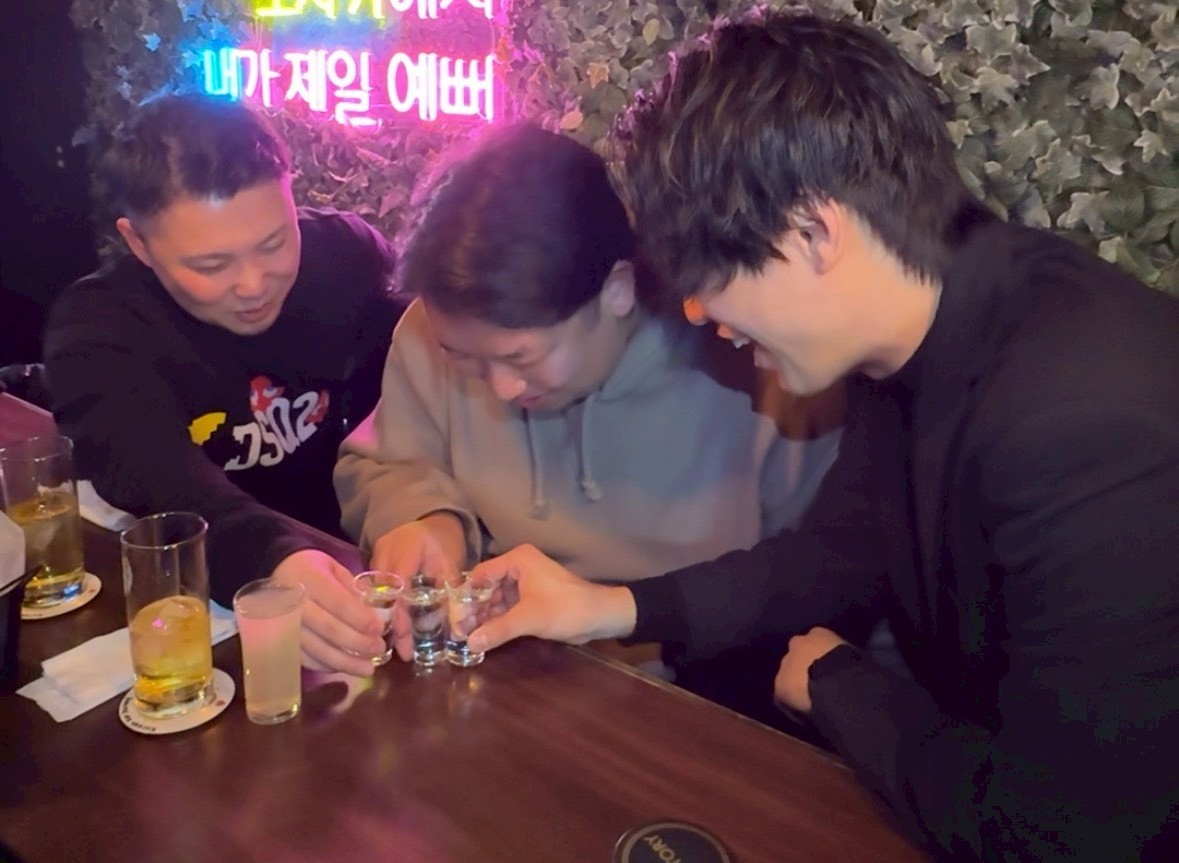
Bonenkai questions
Q. What does bonenkai mean?
It is the Japanese name for a year-end drinking party held by a workplace or by friends, mainly in December. The word carries the sense of putting the troubles of the past year behind you.
Q. What is the difference between a bonenkai and a shinnenkai?
The timing. A bonenkai closes the old year; a shinnenkai is the gathering held after the new year has started.
Q. What is a nijikai?
The second round. After the first party, the people who want to continue move together to a different place. It can be treated as optional, so leaving after the first party is fine.
Q. What does the kanji do?
The kanji is the organiser: they collect dates and numbers, book the venue, decide who leads the toast and the closing words, and gather payment at the end of the night.
Q. What is ippon-jime?
One form of tejime, the hand-clap that a gathering can close with, done together by everyone present. Sanbon-jime is another form.
Q. Can your bars host a bonenkai nijikai for a group?
Yes. Each bar can be hired whole: HEAVEN for up to 30 people, SARANG for up to 20 and 韓国バーMOON for around 15. Whole-bar hire runs on a special rate system, so send the bar an Instagram DM with your date and numbers.
Q. Do we need to book for a smaller group?
Walking in is fine, as no reservation is needed. If you would like to arrange things ahead, a phone call or an Instagram DM works, and December weekends are a good reason to get in touch early.
Q. Is there somewhere quiet for a small group?
SARANG is a quiet, fully non-smoking bar built around counter seats, suited to a few friends or to one person on their own.
Bar information is from Google Maps (as of September 2026). Whole-bar hire capacities are from each bar (as of October 2026). Check last-train times on each railway company’s official site.