Makgeolli vs Soju:
How They Differ and How to Drink Makgeolli
Makgeolli is brewed and left cloudy; soju is distilled. Korean tax law puts makgeolli among the fermented liquors: grain is fermented with nuruk and water, and the mash is bottled without being filtered, which is where the milky look comes from. Soju sits in a different group altogether, the distilled liquors. That one difference in method explains most of what you notice in the glass.
I am a Korean who runs three Korean bars in Higashi-Shinsaibashi, Osaka, and this page is for visitors who have seen both words on a menu and want to know which is which.
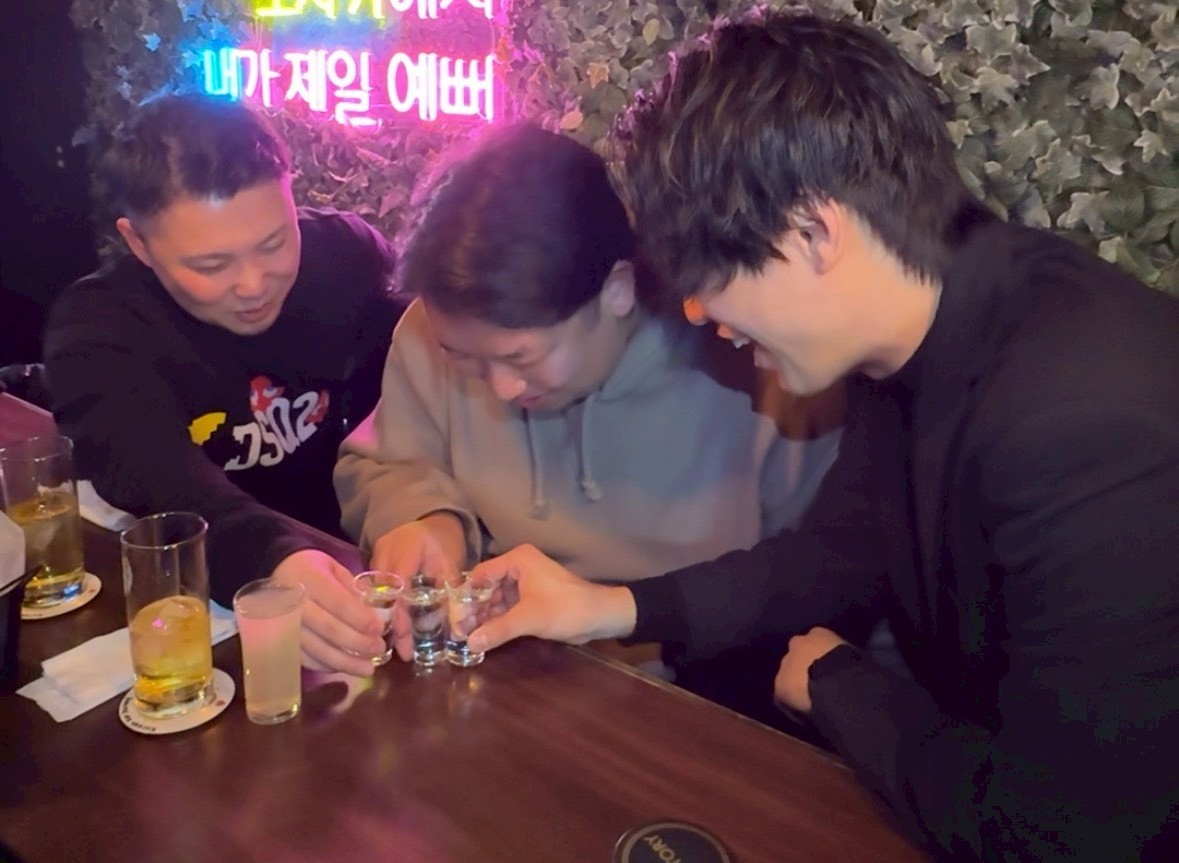
Makgeolli vs soju at a glance
The legal categories below come from Korea's Liquor Tax Act. Strength is left out on purpose: it differs from one bottle to the next, so read the label for the alcohol content of any makgeolli you buy.
| Makgeolli (막걸리) | Soju (소주) | |
|---|---|---|
| Made by | Fermenting a starchy grain such as rice or wheat with nuruk (a Korean fermentation starter) and water | Distilling, or thinning distilled alcohol with water |
| Looks | Cloudy, because the mash is not filtered; sediment settles at the bottom over time | Clear |
| How it is served | Chilled, gently mixed first, poured into a bowl (사발, sabal) or small cups | Explained in our soju starter guide |
| Legal category in Korea | Takju (탁주), one of the fermented liquors (발효주류) | One of the distilled liquors (증류주류), split into distilled and diluted soju |
How soju is made and how it compares with Japanese sake and shochu is laid out in Soju vs Sake vs Shochu. The rest of this page stays with makgeolli.
What the law says makgeolli is, and the kinds you will see
In the appendix to Korea's Liquor Tax Act, takju is a drink made from ingredients that contain starch (sprouted grain excluded), nuruk and water, fermented into a mash and finished without filtering, so it stays cloudy. Makgeolli is the everyday name for takju. A close relative, yakju (약주), starts the same way but is filtered before bottling, and that filtering is the line between the two.
| Kind | What makes it different | How to tell |
|---|---|---|
| Plain makgeolli | Grain, nuruk and water only, left unfiltered | The ingredient list on the label |
| Flavoured makgeolli | Sugar, fruit, vegetables or similar added; the law still counts it as takju | The added ingredients are named on the label |
| Sparkling makgeolli | Carbon dioxide added during fermentation or finishing, which Korea's Food Code allows for takju | The label, and the pressure you feel when opening |
| Unpasteurised (생막걸리, saeng) | Not heat-treated; needs to stay in the fridge and keeps for a shorter time | Check the label for 생 or the storage instructions |
| Pasteurised (살균, salgyun) | Heat-treated, so it keeps for longer | Check the label for 살균 |
These are not exclusive boxes: one bottle can be flavoured and unpasteurised at the same time, for example. As for taste, it depends on the grain, what has been added and how fresh the bottle is, so there is no single flavour to expect.
How to drink makgeolli: chill it, mix it gently, then pour
- Keep it cold. Makgeolli is usually drunk chilled, and an unpasteurised bottle belongs in the fridge anyway.
- Bring the sediment back up slowly. The cloudy part sinks while the bottle stands. Turn it upside down and back again a few times, calmly, instead of shaking it.
- Open sparkling bottles with care. If a carbonated bottle has been shaken hard, it can foam out the moment you loosen the cap, so open it a little at a time.
- Pour into a bowl or small cups. In Korea, makgeolli is often served in a wide bowl called a sabal, or in small cups.
There is also a well-known Korean habit of pairing makgeolli with jeon, especially pajeon (a savoury pancake with spring onion), on rainy days.
Ways to mix makgeolli
Makgeolli is often drunk straight, but mixing it is common too. Three approaches you may come across:
- With a sweet clear soda (sold as "cider", サイダー, in Japan) for a lighter, fizzier glass.
- With soda water if you want the bubbles without extra sweetness.
- With soju, a combination some people enjoy for a stronger glass.
There is no fixed recipe for any of these. Start with a small amount of the mixer and adjust to your own taste. Somaek, the beer and soju mix, is a different drink, explained in the soju guide.
Makgeolli and soju in Osaka: our three bars
Our bars are places for drinking, and we do not serve food, so enjoy your jeon and dinner somewhere first and come to us for the Korean drinks. On the menu you will find soju, makgeolli and somaek. Which kinds of makgeolli we have changes, so ask the staff on the night. All three bars are on upper floors of buildings in Higashi-Shinsaibashi 2-chome, a short walk apart, and you can walk there from Shinsaibashi Station or Namba Station. Korean staff work behind the counter and K-POP fills the room.
Each bar is open from 21:00 to 05:00 the next morning, every day of the year. Walk in without booking, or call or send an Instagram DM if you would like to reserve or check something first. Payment works with either a credit card or cash. Guests must be 20 or older, and please never drive after drinking. Each of the three holds a 4.9 rating on Google Maps; the review counts as of September 2026 were 2,844 for HEAVEN, 678 for SARANG and 380 for 韓国バーMOON.
| The night you have in mind | Bar | Seats, smoking and extras |
|---|---|---|
| Two people talking quietly, or one person drinking alone | SARANG | A quiet bar, comfortable alone; fully non-smoking, mostly counter seats, no karaoke |
| Sinking into a lounge seat | 韓国バーMOON | Shisha at lounge seats, plus karaoke; smoking is allowed inside |
| Singing with a group of friends | HEAVEN | Karaoke and free darts; smoking is allowed inside |
If you cannot pick one, Use the bar chooser, which asks a few short questions and points you to one of the three.
HEAVEN
Karaoke and darts, smoking allowed inside; for a lively night with friends.
5F Galaxy Building No.3, 2-4-19 Higashi-Shinsaibashi, Chuo-ku, Osaka
Open in Google MapsMOON
Lounge seats, shisha and karaoke, smoking allowed inside; for taking it slow.
3F LUXE Building Naka Room, 2-8-6 Higashi-Shinsaibashi, Chuo-ku, Osaka
Open in Google MapsSARANG
Quiet and fully non-smoking, mostly counter seats with no karaoke; for a calm glass alone or for two.
Room 206, Gold Center Building, 2-8-12 Higashi-Shinsaibashi, Chuo-ku, Osaka
Open in Google Maps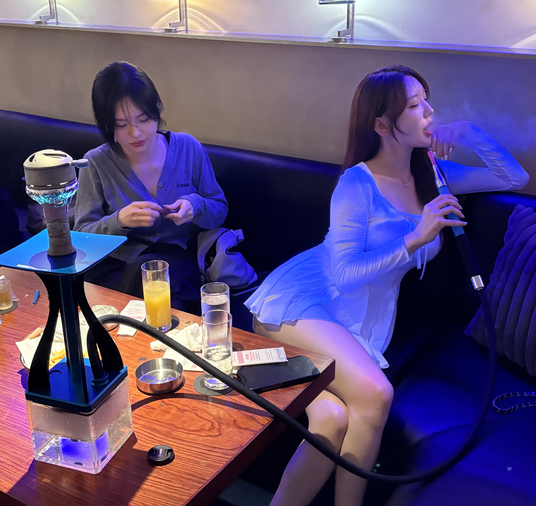
Makgeolli vs soju: FAQ
Q. What is the main difference between makgeolli and soju?
How they are made. Makgeolli is a fermented drink bottled unfiltered and cloudy, while soju is a distilled liquor under Korean law.
Q. What is makgeolli's alcohol content?
It varies by product, so this page gives no single figure. The strength is printed on every bottle's label.
Q. Is makgeolli the same as Korean rice wine?
Makgeolli is often called that in English. Strictly, it is takju, a cloudy fermented drink, and it can be made from rice, wheat or other starchy grains.
Q. Why does makgeolli separate in the bottle?
Because it is not filtered, the cloudy solids sink as the bottle stands. Tip it upside down and back gently before pouring.
Q. How can I tell unpasteurised makgeolli from pasteurised?
Look at the label: 생 marks unpasteurised makgeolli, which needs refrigeration, and 살균 marks the pasteurised kind, which lasts longer.
Q. How much alcohol can I bring into Japan?
Japan Customs lets each adult bring in three bottles of alcohol (roughly 760 ml each) without duty. Travellers under 20 get no allowance for alcohol, and anything over the limit must be declared and is taxed.
Q. What time are your bars open, and do I need a reservation?
All three open at 21:00 and close at 05:00, every day. Booking is optional; you can phone or message us on Instagram if you want to.
Definition of makgeolli (takju): Korea Law Information Center (law.go.kr), appendix to the Liquor Tax Act (주세법), and the Food Code (식품공전) of Korea's Ministry of Food and Drug Safety (both checked on 10 November 2026). Alcohol allowance: Japan Customs (checked on 10 November 2026). Bar information comes from our own official details; ratings and review counts are from Google Maps (as of September 2026).