What Is Soju? ABV, Somaek
and How Koreans Actually Drink It in Osaka
Hi — I'm Korean, and I run three Korean bars (HEAVEN, MOON and SARANG) in Shinsaibashi, Osaka. Almost every night a traveler picks up one of our green bottles and asks the same three questions: "So what is soju?" "Is it like sake?" and "Why does everyone pour for each other?" This page is my full answer — what soju actually is, how it differs from sake, the pouring rituals Koreans grow up with, and how to enjoy it the way we do back home. Written by someone who opens a few dozen green bottles every night, not copied from a guidebook.
What Is Soju, Exactly?
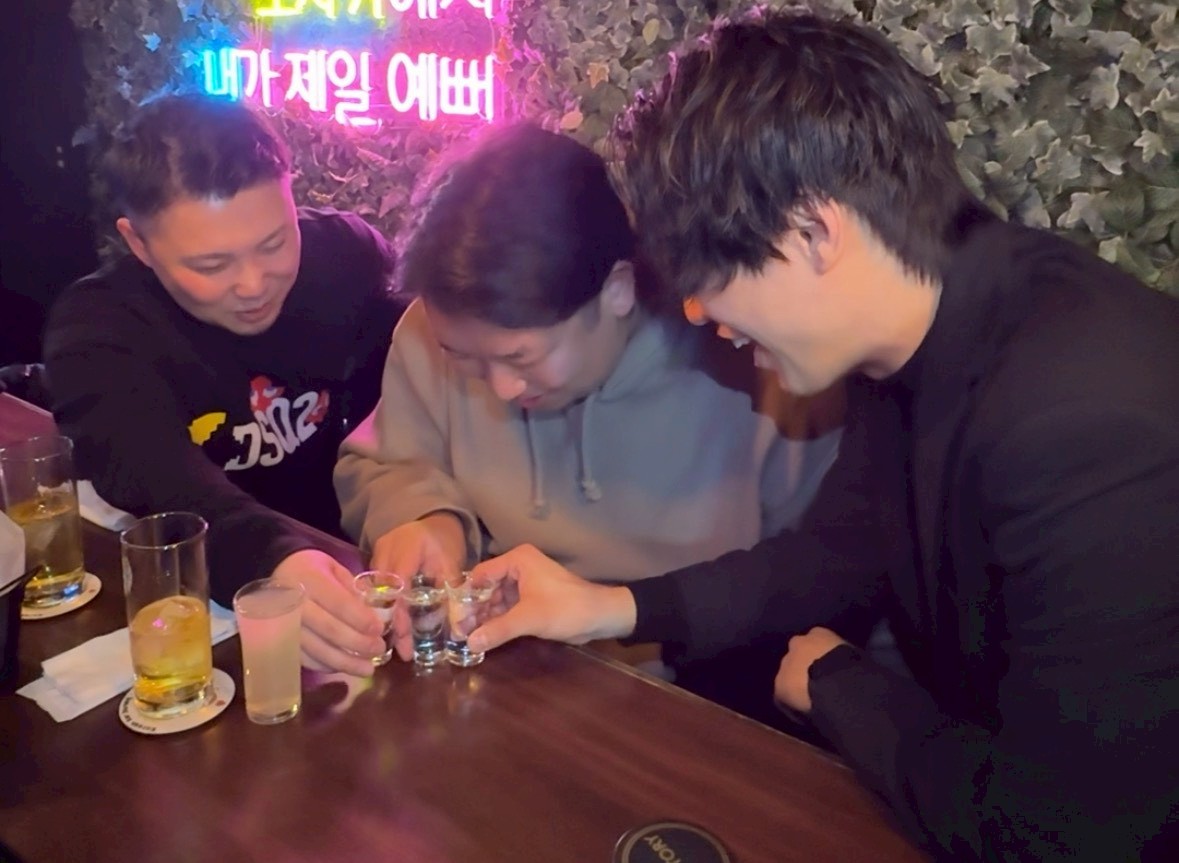
Soju is Korea's national spirit: a clear, clean-tasting alcohol served ice-cold in small shot glasses, almost always from the iconic green bottle. Most soju you'll meet today is the "diluted" style — a neutral spirit distilled from starches like sweet potato or tapioca, blended with pure water and a touch of sweetness. That's why it tastes so smooth and goes with basically any food. And it isn't a niche drink. By sales volume, soju is quietly the biggest spirit on the planet:
Soju vs Sake: They're Not the Same Drink
Travelers in Japan often assume soju is "Korean sake." It isn't — they're different categories of alcohol. Sake is brewed (fermented from rice, like beer or wine is fermented), while soju is a distilled spirit (like vodka or shochu) that's been brought down to an easy-drinking strength. That one difference explains almost everything else: the taste, the glassware, and the way each is drunk.
| Soju | Sake (nihonshu) | |
|---|---|---|
| Country | Korea | Japan |
| How it's made | Distilled spirit, diluted to drinking strength | Brewed (fermented) from rice |
| Typical strength | About 16% (mainstream brands) | About 15% |
| Flavor | Clean, neutral, lightly sweet | Aromatic — rice, fruit, umami notes |
| How it's served | Ice-cold, in small shot glasses | Chilled, room temp or warmed, in a choko cup |
| Mixing culture | Loves being mixed — somaek, fruit soju | Almost never mixed |
| The vibe | Social fuel — poured for each other all night | Sipped and savored with food |
Strengths are typical figures for mainstream products — individual brands vary.
Neither is "better" — they're built for different nights. Sake rewards slow attention; soju is a social engine. In Korea nobody nurses a glass of soju alone in a corner: it moves around the table, glass by glass, toast by toast. Which brings us to the part most guides skip — the rituals.
How Koreans Drink It: 5 Rituals to Know
You don't have to follow any of these in our bars — but do a couple of them and watch any Korean at the table light up. Drinking etiquette is where Korean culture shows its heart: it's all about looking after the people around you.
- Never pour your own glass. You pour for others, they pour for you. Watching for someone's empty glass is the whole game — filling it before they ask is the Korean way of saying "I've got you."
- Pour and receive with two hands. Hold the bottle with both hands when pouring for someone senior to you; hold your glass with both hands when receiving. One hand is fine between close friends.
- Turn slightly away for the first shot with elders. Traditionally, juniors turn their head away from seniors when drinking as a sign of respect. Travelers aren't expected to do it — which is exactly why it earns a delighted "oh, you know that?!" when you do.
- The first round is a team event. The first glass is poured for everyone, raised together — "Geonbae!" (cheers) — and traditionally finished in one go. After round one, drink at whatever pace you like.
- Food is not optional. Koreans practically never drink without anju (drinking food). Soju's clean taste is designed to cut through rich, spicy dishes — it's a duo, not a solo act.
.webp)
Somaek, Fruit Soju and Other Ways In
Straight shots are only chapter one. If neutral spirits aren't your thing, Korea has already solved that for you:
- Somaek (소맥) — soju + maekju (beer), Korea's beloved bomb mix. A shot of soju dropped or poured into a glass of cold beer, gulped while it's foaming. Lighter than a shot, livelier than a beer; the name is simply the two words squashed together.
- Fruit soju — green-bottle soju in flavors like green grape, peach, plum and grapefruit, usually a notch lighter in alcohol. The gateway soju: if you've ever said "I don't like the taste of alcohol," start here.
- Soju cocktails and highballs — because soju is clean and neutral, it mixes with almost anything: yogurt drinks, soda, fresh fruit. Korean bars love inventing house mixes, and yes, we have ours.
- Korean drinking games — soju and games are inseparable in Korea, from bottle-cap flicking to rapid-fire number games. Come curious and someone at the counter will teach you one — losing is how you learn.
One honest tip from behind the bar: soju is smooth enough that the first bottle disappears fast, and at around 16% it's still a spirit, not a beer. Pace yourself with food and water, Korean-style — the goal of a soju night is the conversation, not the count of empty bottles.
Where to Drink Soju in Osaka — the Korean Way
You can buy a green bottle in any Japanese convenience store, but soju without the table culture is only half the experience. For the real thing — the two-hands pour, the somaek foam, the "one more bottle?" grin — you want a Korean bar, run by Koreans, where the rituals happen naturally. That's exactly what our three places in Higashi-Shinsaibashi are. All of our staff are Korean, fluent in Japanese and comfortable in English, so you can ask anything mid-pour — "why the two hands?" gets answered with a story, not a shrug.
- HEAVEN — the party floor: free karaoke and darts, K-pop all night, VIP rooms for groups. Best for a loud, laughing somaek night.
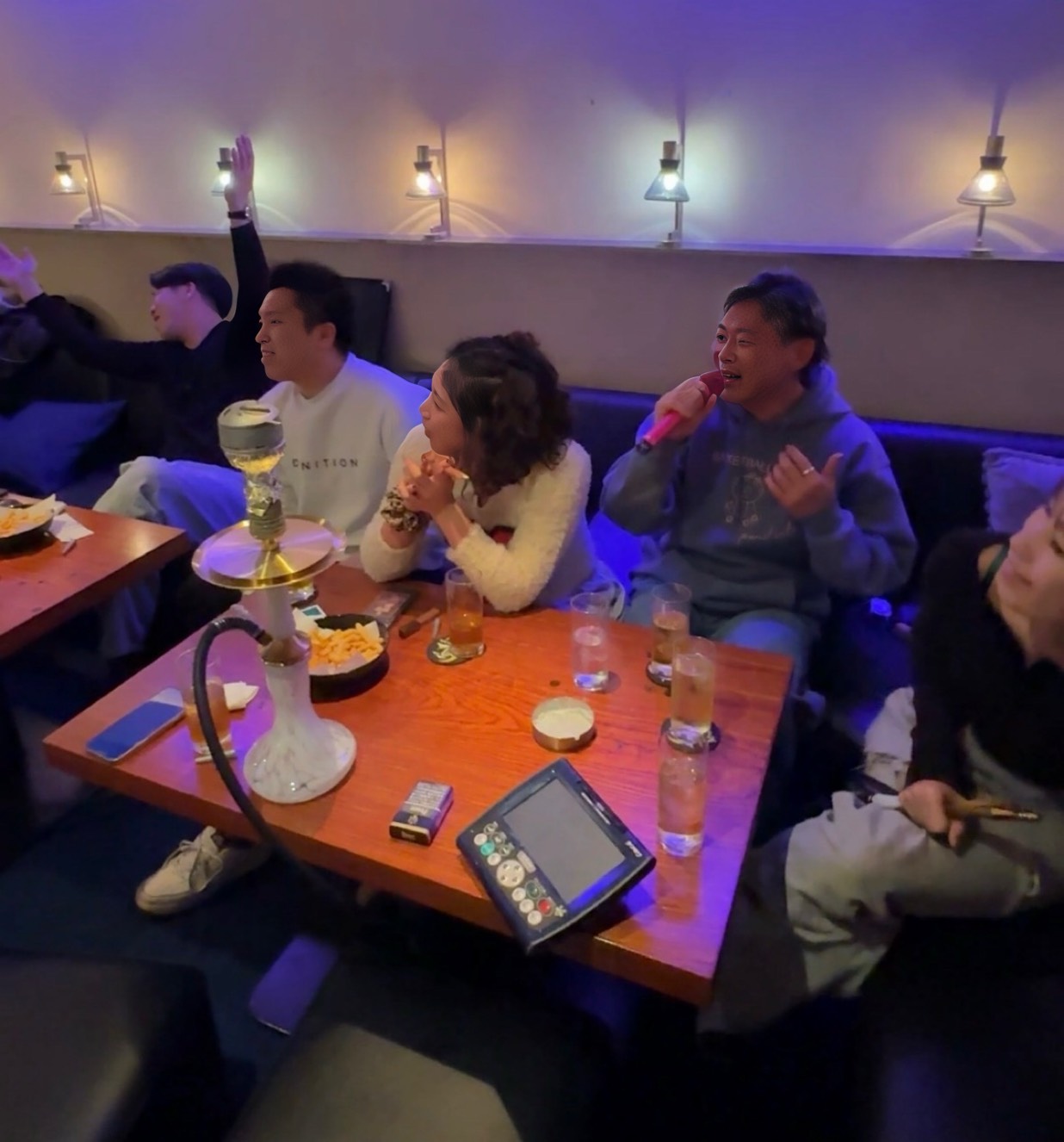
- MOON — Korean bar × shisha, Japan's first of its kind. Lounge seating for a slow soju-and-shisha evening.
- SARANG — 100% non-smoking, counter-focused and karaoke-free on purpose. The place to actually talk about what you're drinking.
- All three are within a 2–5 minute walk of each other, open nightly 9:00 PM – 5:00 AM, no closing days, no reservation needed
- Over 3,800 Google reviews across the three bars, all rated 4.9 or higher (as of September 2026)
Wondering which of the three fits your night? Take the 30-second quiz in our bar-matching guide, or just start at whichever door you reach first — the soju is cold in all three.