Pick-Up Bars in Osaka?
How to Meet People Safely at Night
In Japan, picking someone up is called nanpa (ナンパ): walking up to a stranger on the street or in a bar and asking them to go for a drink. Talking to someone is not illegal in itself. But following a person persistently, making obscene remarks, or blocking their way is banned under Osaka Prefecture’s nuisance prevention ordinance. On top of that, Minami, which includes Shinsaibashi, Dotonbori and Namba, is a no-touting zone under an Osaka City ordinance, where recruiting people on the street as customers or as staff (“scouting”) is itself a violation. If you go out hoping to meet people, remember three things: choose the bar yourself, never let someone you just met decide where you go, and decide how you will get home before you start.
Hello. I am the Korean owner of three Korean bars in Higashi-Shinsaibashi: HEAVEN, 韓国バーMOON and SARANG. To be clear from the start, our three bars are bars where you drink and talk — not pick-up bars, girls bars, hostess clubs or nightclubs. Even so, almost every night someone asks “Can I come alone and still talk to people?” or tells us “Someone kept following me in Dotonbori.” This page answers those questions using only information published by Osaka Prefecture, Osaka City, the Osaka Prefectural Police and the National Consumer Affairs Center of Japan. No forum posts or personal blogs were used as sources.
.png)
If you searched for “pick-up bars in Osaka”
Many visitors look for bars in Osaka that are known as places to pick people up or to meet strangers. This page does not list bars like that. Instead, it explains where approaching people becomes a problem under Osaka’s rules, and the kinds of trouble that actually start with meeting someone new, based on what official bodies publish.
Japanese bars also work differently from bars in many other countries. A girls bar, for example, is not what the name may suggest; see girls bars in Osaka explained. For street touts and overcharging, see Osaka nightlife scams and touts.
Nanpa and the ordinances: where the line is
The line between “talking to someone” and “a nuisance” is set by the wording of the ordinance, not by how either person feels. Osaka Prefecture’s ordinance on the prevention of violent and disorderly conduct that causes significant nuisance to the public (the nuisance prevention ordinance) includes these provisions:
| Provision | What it says (summary following the official wording) |
|---|---|
| Article 6 (ban on obscene conduct) | In public places or on public transport, no one may use obscene words or behaviour that seriously embarrasses a person or makes them feel uneasy. Touching a person’s body in the same way, over clothing or directly, is also banned |
| Article 10 (ban on repeated following, etc.) | No one may repeatedly follow a person, lie in wait, block their way, or use markedly rough or violent words or behaviour |
| Article 8 (ban on improper touting, etc.) | No one may tout for customers or invite people to work by persistent means such as grabbing their body or clothing, taking their belongings, blocking their way or following them |
So following someone after they have said no once, stepping in front of them so they cannot walk on, or touching them — at that point it is no longer “meeting people” but conduct the ordinance prohibits. Knowing this line helps both sides decide quickly. If you are used to a more forward bar culture at home, keep in mind that the same approach can be read very differently here.
Not everyone who chats you up on the street is trying to meet you
Osaka City’s ordinance on touting bans not only touting for customers, but also inviting people to work at a venue (so-called scouting) and loitering on the street to wait for targets. In the Minami no-touting zone this applies whatever the type of business, and anyone who does not comply can be fined. In other words, some of the friendly people who stop you in busy streets are not looking to meet you at all, but to walk you to a venue or recruit you. How to spot and turn down touts is covered in Osaka nightlife scams and touts.
Trouble that starts with meeting someone: what the authorities warn about
Meeting people is not the problem. Far more people meet someone in Osaka, have a good drink together and go home happy. But some kinds of trouble tend to happen when you let someone you have only just met decide where you go or how much you spend, and official bodies warn about them specifically.
1. A new acquaintance takes you to a bar, and the bill is huge
The Minami Police Station of the Osaka Prefectural Police, which covers the Minami area, warns on its official rip-off page that people who met someone on a dating app, were invited to “a place I know”, and were then charged a very large amount at the end is a frequent problem. It gives two pieces of advice: check the pricing system carefully, and check the amount carefully before paying by credit card.
2. Romance turns into a “money-making opportunity”
In a notice dated 18 February 2021 warning about investment fraud that starts on dating sites and matching apps, the National Consumer Affairs Center of Japan describes a pattern in which someone poses as a romantic interest, draws the victim into trading crypto-assets or using overseas trading sites, and then demands money as a “fee” when the victim tries to withdraw. Its advice: do not jump at offers that sound too good, do not hand over personal information lightly, and if in trouble, contact the consumer hotline 188.
3. A stranger approaches you on the way home
The Osaka Prefectural Police advice on avoiding sexual crime asks people to choose busy, well-lit streets where possible, not to walk while absorbed in a smartphone or with earphones in, and if a stranger speaks to you, not to step close, but to keep enough distance that they cannot reach you straight away. These three points matter most on the walk home after drinking.
To repeat: this does not mean every place to meet people, or every bar, is like this. The problem is not “meeting people” or “the neighbourhood”, but handing your decisions over to someone else.
Five ways to stay out of trouble
1. Say no briefly and clearly, and keep walking
If you are not interested, a short “No, thank you” (or “Daijōbu desu”) is enough. You do not need to explain or stop to listen. If the person keeps following you, that may count as the “following” the ordinance bans. Walk toward a bright main street such as Shinsaibashi-suji or Midosuji, and if they persist, go into the nearest koban (police box).
2. Choose the bar yourself, and check it on Google Maps first
Even if your new acquaintance says “I know a good place”, the rule is simple: you choose where you go. Search the bar’s name and look at the number of reviews, the rating, the opening hours and photos of the inside before you walk in. A bar that does not show up in search, or one whose location only the other person knows, is a good reason to say “maybe another time”.
3. Ask how charges work before your first drink
Before ordering, ask whether there is a seat charge or an otoshi (a small dish served with the first drink), whether it is time-based, and what would add to the bill. Osaka Prefecture’s ordinance requires venues that serve alcohol while entertaining customers in a festive atmosphere to display their charges, so avoid any place that cannot answer.
4. Decide how and when you will get home before you start
Last train, taxi, or staying out until morning? Decide before you drink, so you do not end up going along with whatever happens. If you came with friends, agree to message each other whenever you split up.
5. Save these numbers
| Situation | Contact | Notes |
|---|---|---|
| Followed, touched, or not allowed to leave | 110 (police) | From where you are. Minami Police Station: 1-5-26 Higashi-Shinsaibashi (06-6281-1234) |
| Help in English, Chinese or Korean, 24 hours | 050-3816-2787 | Japan Visitor Hotline, run by the Japan National Tourism Organization (JNTO). Emergencies and general assistance, 24 hours a day, 365 days a year |
| A huge bill, or an investment or money-making pitch (also after you have paid) | 188 | Japan’s consumer hotline, operated by the Consumer Affairs Agency; connects you to the nearest consumer affairs centre. Japanese-language |
| Your own country’s consulate | Consulate-General in Osaka | Many countries have a consulate-general in Osaka; check its official website for the emergency line |
About our bars: not pick-up bars, but bars where you drink and talk
You may be wondering “So what about your bars?” Here are facts you can check from outside before you go in.
- None of our three bars (HEAVEN, 韓国バーMOON and SARANG) is a pick-up bar, a girls bar, a hostess club or a nightclub; they are bars where you drink and talk.
- They are Korean bars where you drink and chat with Korean staff, so you will not be stuck for conversation even if you come alone. Guests come as friends, couples, or on their own.
- All three are listed on Google Maps with public reviews: HEAVEN 2,844, 韓国バーMOON 380 and SARANG 678, each rated 4.9 (as of September 2026).
- Open every day, 21:00 to 05:00, no closing day, no reservation needed. You can ask questions by phone or Instagram DM before you come.
- Credit cards and cash are accepted.
- Smoking is allowed inside HEAVEN and 韓国バーMOON. SARANG is fully non-smoking.
- The legal drinking age in Japan is 20; guests under 20 cannot enter.
If you want to make Korean friends, see meeting Koreans in Osaka; for language exchange, language exchange in Osaka; for dating across cultures, Japanese girlfriend or boyfriend; and for choosing between the three, the quick guide by purpose.
So what kind of night can you have? Three bars by purpose
All three are in Higashi-Shinsaibashi 2-chome, within a five-minute walk of each other. All three are bars, not Korean restaurants, and do not serve food.
| Your night | Bar | Why |
|---|---|---|
| Sing with friends and keep the energy up | HEAVEN | Free karaoke and darts, plus a VIP room for groups on their second or third stop |
| Sit down and talk for a long time | 韓国バーMOON | Shisha and lounge seats, for a long conversation with the people you came with |
| A quiet drink, or a bar that is easy to walk into alone | SARANG | A quiet bar, fully non-smoking, with no karaoke; mostly counter seats, so coming alone is easy |
For drinking on your own see the Osaka solo drinking guide, for a wider look at the area Shinsaibashi nightlife, and for general safety the Osaka nightlife safety guide.
HEAVEN
Free karaoke and darts. For a night of singing with friends.
5F Galaxy Building No.3, 2-4-19 Higashi-Shinsaibashi, Chuo-ku, Osaka
Open in Google MapsMOON
A Korean bar with shisha and lounge seats. For sitting down and talking.
3F LUXE Building Naka Room, 2-8-6 Higashi-Shinsaibashi, Chuo-ku, Osaka
Open in Google MapsSARANG
A quiet, fully non-smoking bar with no karaoke. Mostly counter seats, easy to visit alone.
Room 206, Gold Center Building, 2-8-12 Higashi-Shinsaibashi, Chuo-ku, Osaka
Open in Google Maps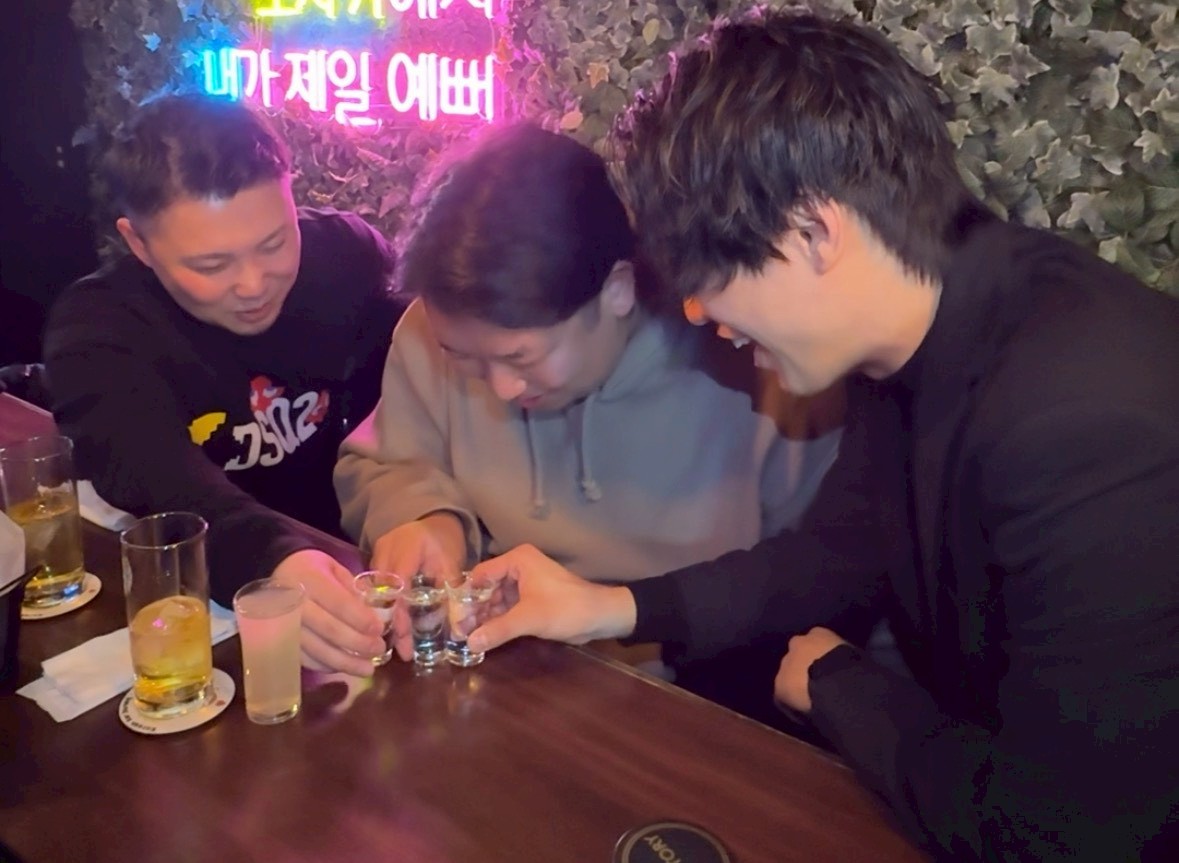
FAQ
Q. What is nanpa? Is picking people up illegal in Japan?
Nanpa means approaching a stranger on the street or in a bar and asking them out. Talking to someone is not illegal in itself, but Osaka Prefecture’s nuisance prevention ordinance bans obscene words or behaviour in public places that make a person uneasy, and repeatedly following, lying in wait or blocking someone’s way. Once someone says no, stop.
Q. Are there pick-up bars in Osaka?
This page does not introduce bars that market themselves that way. What the Minami Police Station does warn about is people being taken to a bar by someone they just met and then charged a very large amount. Whichever bar you go to, choose it yourself and check it on Google Maps before you walk in.
Q. Someone approached me in Shinsaibashi or Dotonbori. What should I do?
If you are not interested, say no once and keep walking toward a bright main street. Minami is a no-touting zone under Osaka City’s ordinance, so approaching people to take them to a venue or to recruit them is banned whatever the type of business. If someone keeps following you, go to a koban (police box) or call 110.
Q. Someone I met started talking about investments or making money. What now?
The National Consumer Affairs Center of Japan warns about investment fraud that starts on dating sites and matching apps and leads to crypto-asset or overseas trading. Do not go along with it and do not hand over personal information. For help in English, Chinese or Korean, call the Japan Visitor Hotline at 050-3816-2787 (24 hours); the consumer hotline 188 is in Japanese.
Q. Are there bars in Shinsaibashi where I can drink alone and still talk to people?
Our three bars are places where you drink and chat with Korean staff, so you will not be stuck for conversation on your own. SARANG in particular is a quiet, fully non-smoking bar with no karaoke and mostly counter seats, so coming alone is easy. Open daily 21:00 to 05:00, no reservation needed.
Q. Are HEAVEN, MOON and SARANG pick-up bars?
No. All three are bars where you drink and talk, not pick-up bars, girls bars, hostess clubs or nightclubs. They are listed on Google Maps with public reviews (2,844, 380 and 678 as of September 2026, each rated 4.9), so you can check before you go in.
Q. Is it OK to go alone as a woman?
You can check the reviews and photos of the inside on Google Maps before you go, and ask questions by phone or Instagram DM before you come. For more on going out alone, see the Osaka solo drinking guide.
Q. Do the bars serve food?
No. All three are bars, not Korean restaurants, and do not serve food, so eat before you come. Guests under 20 cannot enter.
Sources (all accessed 6 October 2026): Osaka Prefecture, ordinance on the prevention of violent and disorderly conduct that causes significant nuisance to the public (Osaka Prefecture regulations; Articles 6, 8 and 10); Osaka City, “Outline of the Osaka City ordinance on touting” (Citizens Bureau, Community Safety); Osaka Prefectural Police, Minami Police Station, rip-off warning page; Osaka Prefectural Police, advice on avoiding sexual crime; National Consumer Affairs Center of Japan, “Beware of investment fraud that starts on dating sites and matching apps” (notice of 18 February 2021); Consumer Affairs Agency, “Consumer Hotline 188”; Japan National Tourism Organization (JNTO), “Japan Visitor Hotline”. Ordinances are summarised from official wording, with no legal interpretation added. They can change, so check the official pages for the latest version. Our bar details are as shown on Google Maps in September 2026.