New Year in Japan: traditions and customs,
and how Korea does it differently
In Japan, New Year (shogatsu) is celebrated on 1 January. On New Year's Eve, temples ring their bells 108 times, families eat toshikoshi soba, and in the first days of January people make their first shrine or temple visit (hatsumode) and share boxed osechi food. Korea marks the turn of the year with 33 strikes of the bell at Bosingak in Seoul, but its big family holiday is the lunar New Year, Seollal, which falls on 7 February in 2027.
We are a Korean owner running three bars in Higashi-Shinsaibashi, Osaka, and every December guests from both countries ask us how the other side spends New Year. So we checked the answer on 26 November 2026 with public sources only: Japan's National Diet Library, Cabinet Office, Ministry of Agriculture and the Japan National Tourism Organization (JNTO), plus the Seoul Metropolitan Government and Korean government bodies. Transport and other venues' opening hours are not covered here.
Japanese New Year vs Korean New Year at a glance
The key difference is the calendar. Japan switched to the solar calendar in 1873: according to the National Diet Library, the old date of the 3rd day of the 12th month of Meiji 5 simply became 1 January of Meiji 6. Under Japan's national holidays law, 1 January (ganjitsu) is the day to celebrate the beginning of the year (Cabinet Office). Korea also welcomes 1 January, but families gather for the lunar New Year.
| Moment | Japan (shogatsu) | Korea |
|---|---|---|
| New Year's date | 1 January (solar calendar) | Lunar New Year, Seollal: 7 Feb 2027, holiday 6–9 Feb |
| New Year's Eve bell | Temples across Japan, 108 strikes | Bosingak, central Seoul, 33 strikes |
| Food on the night | Toshikoshi soba, long noodles for a long life | The signature dish waits for Seollal: tteokguk rice-cake soup |
| First thing in the new year | Hatsumode, the first shrine or temple visit | Watching the first sunrise; on Seollal, sebae bows to elders |
| New Year food | Osechi, packed in stacked boxes | Tteokguk: one bowl means you are one year older |
Why 108 bells in Japan and 33 in Seoul?
JNTO describes joya no kane as the temple bell being rung 108 times on New Year's Eve, a number said to represent the earthly desires that trouble the human heart. It is not one central event: temples all over the country ring their own bells, so on a late walk in Osaka you may hear one from a neighbourhood temple.
In Seoul, the city runs the Jeya-ui Jong bell-ringing ceremony at Bosingak in Jongno. The Seoul Metropolitan Government's page for the last edition shows it ran from 22:50 on 31 December 2025 to 00:20 on 1 January 2026, built around 33 strikes of the bell. The city's culture site explains that the number comes from a Buddhist idea: the bodhisattva Avalokiteshvara divides into 33 forms in the heavens to save all beings. Details for the 2026 New Year's Eve were not yet published when we checked on 26 November.
Japanese New Year traditions: what to know as a tourist
- Toshikoshi soba: JNTO explains that eating these noodles on New Year's Eve is a way to bid farewell to the old year and its misfortunes, and their long, thin shape stands for long life.
- Hatsumode: the first visit of the year to a Shinto shrine or Buddhist temple. Many people set off late on New Year's Eve itself, JNTO notes. For where to go in Osaka, with hours for Sumiyoshi Taisha and other shrines, see our Hatsumode Osaka 2027 guide.
- Osechi ryori: Japan's Ministry of Agriculture says osechi was first made as an offering to the toshigami, the deity of the new year, and is packed into stacked boxes to wish for good fortune piling up. JNTO adds that it was designed to keep for the first three days of the year without refrigeration.
- Decorations: JNTO also lists kadomatsu pine arrangements, shimekazari rope decorations and kagami mochi rice cakes, which you will see at entrances and on household altars in early January.
For the countdown itself, the Osaka New Year's Eve 2026 guide covers events and shrines, and our page on which trains run all night covers getting home.
How Korea spends New Year: sunrise, tteokguk and sebae
On 1 January, Korea's Ministry of Culture, Sports and Tourism says families and friends head to beaches, mountains and other open spaces to see the first sunrise, believing a wish made then brings luck for the year. Jeongdongjin in Gangneung and Homigot in Pohang on the east coast are among the places it names.
The real family holiday is Seollal. The Korea AeroSpace Administration's 2027 calendar guidelines, announced on 29 June 2026, put Seollal on Sunday 7 February 2027, with a four-day break from 6 to 9 February including a substitute holiday. Korea's Rural Development Administration notes that a bowl of tteokguk on Seollal means growing a year older, and the Encyclopedia of Korean Culture describes sebae as the first greeting of the year, a deep bow from younger family members to their elders.
Seeing in the new year in Osaka: our three bars stay open until 5am
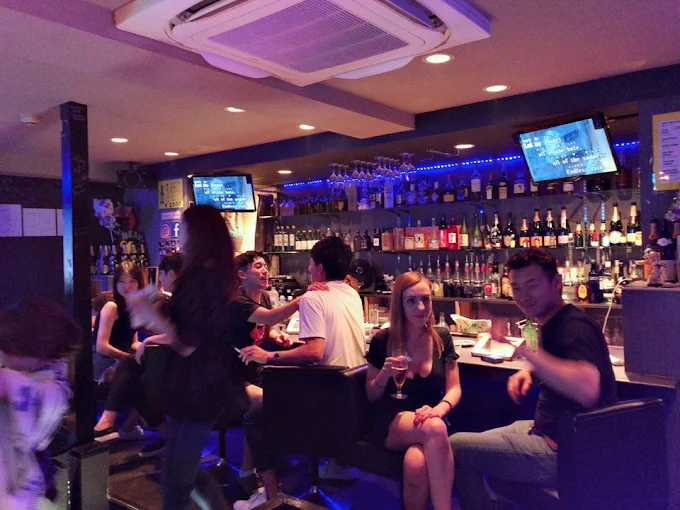
On New Year's Eve, all three of our bars open at 9pm on 31 December and stay open until 5am on 1 January, and we do not close over the New Year period. Drop in before or after the bells, or on your way back from hatsumode, and trade New Year stories with our Korean staff.
| Your New Year's Eve | Bar | The feel of the night |
|---|---|---|
| Keep singing after the countdown | HEAVEN | a bar for singing into the new year | Free karaoke and darts; smoking is allowed inside |
| A long talk about the year on a sofa | MOON | sofas and shisha | Lounge seats with shisha; there is karaoke too, and smoking is allowed |
| One quiet drink after hatsumode | SARANG | a calm counter bar | A fully non-smoking bar with no karaoke; a quiet counter where you can drink alone |
We are drinks-only bars and do not serve food, so have your soba or tteokguk first. No booking is needed; for a larger group, a call or an Instagram DM ahead helps us keep seats. Our staff are Korean and happy to chat in English, Korean or Japanese, and we take cash and credit cards. Guests under 20 cannot be admitted. If reviews help you choose where to toast the new year, all three bars are rated 4.9 on Google Maps (as of September 2026: HEAVEN 2,844 reviews, MOON 380, SARANG 678).
HEAVEN
Sing across midnight. Free karaoke and darts, smoking allowed inside.
5F Galaxy Building No.3, 2-4-19 Higashi-Shinsaibashi, Chuo-ku, Osaka
Open in Google MapsMOON
Sofa seats and shisha for long New Year talks. Karaoke too, smoking allowed.
3F LUXE Building Naka Room, 2-8-6 Higashi-Shinsaibashi, Chuo-ku, Osaka
Open in Google MapsSARANG
Fully non-smoking counter bar with no karaoke, quiet enough to drink alone.
Room 206, Gold Center Building, 2-8-12 Higashi-Shinsaibashi, Chuo-ku, Osaka
Open in Google Maps
New Year in Japan and Korea: FAQ
Q. When is New Year in Japan, and when is it in Korea?
Japan celebrates on 1 January and has done since adopting the solar calendar in 1873. Korea's main New Year holiday is the lunar Seollal, which moves each year: 7 February in 2027, with 6 to 9 February off.
Q. What do Japanese people do on New Year's Eve and New Year's Day?
On the eve, temples ring their bells 108 times and many families eat toshikoshi soba. From 1 January people make hatsumode, their first shrine or temple visit, and eat osechi. Osaka shrines and their New Year hours are in our hatsumode guide.
Q. Is there anywhere to drink in Osaka after the New Year countdown?
Yes. Our three bars in Higashi-Shinsaibashi are open from 9pm on 31 December until 5am on 1 January. Check the New Year trains page before you plan the trip home.
Sources, all checked 26 November 2026: National Diet Library, “The Japanese Calendar” (calendar reform from Edo to Meiji); Cabinet Office of Japan, national holidays; JNTO, “How to celebrate New Year like a Tokyo local”; Ministry of Agriculture, Forestry and Fisheries, page on osechi ryori; Seoul Metropolitan Government, 2025 New Year's Eve bell-ringing page (time, venue, 33 strikes); Seoul Metropolitan Government culture site (Buddhist origin of 33 strikes); Ministry of Culture, Sports and Tourism (KOCIS), “Best spots in Korea to catch first sunrise”; Korea AeroSpace Administration, 2027 calendar guidelines (announced 29 June 2026, as reported by Segye Ilbo); Rural Development Administration webzine, January 2025 (tteokguk); Academy of Korean Studies, Encyclopedia of Korean Culture, “Sebae”. Our New Year's Eve hours are confirmed by the bars. Ratings and review counts: Google Maps, September 2026.
Still deciding where to start the year? Try our bar finder, and for the walk from the station see directions to Higashi-Shinsaibashi.