Where to Drink in Osaka:
Nightlife Areas Compared
Which area should you drink in? Osaka’s nightlife splits into two big districts: Minami in the south (Namba, Dotonbori, Shinsaibashi) and Kita in the north (Umeda, Kitashinchi). For neon and a lively first round on a sightseeing day, go to Dotonbori and Soemoncho. For hopping from bar to bar, go to Ura Namba. Kitashinchi is Kita’s grown-up, more composed side; Tenma is where locals go for izakaya and standing bars; Shinsekai is kushikatsu and an old-school downtown feel. If you want to keep going until morning, Minami is the easiest base, and our own three bars there stay open until 5:00.
I run three Korean bars in Higashi-Shinsaibashi, in the middle of Minami, and the guests who have the best nights tend to treat two questions separately: where to have the first drink, and where to have the last one. This page compares the areas so you can answer the first; the area facts all come from the Osaka Convention and Tourism Bureau’s official OSAKA-INFO site, checked on 21 October 2026.
Osaka’s nightlife areas at a glance
Six areas, one row each. Read across for the station to aim for, what the streets are like, and the kind of evening each one fits best. Dotonbori, Soemoncho, Ura Namba and Shinsaibashi all belong to Minami; Kitashinchi belongs to Kita; Tenma and Shinsekai sit apart from both.
| Area | Nearest station | What the streets are like | Best for a night of |
|---|---|---|---|
| Dotonbori & Soemoncho (Minami) | Namba (Nankai, Kintetsu, Osaka Metro); Nippombashi for Soemoncho | Huge 3D signboards along the canal; on the north bank, neon and a Showa-era retro mood in a former geisha quarter | A loud, bright first round on a sightseeing day |
| Ura Namba (Minami) | Namba | A grid of small places between Sennichimae, Nankai-dori, Kuromon Market and Takashimaya, known for bar-hopping since around 2010 | Several short stops instead of one long one |
| Shinsaibashi & Higashi-Shinsaibashi (Minami) | Shinsaibashi (Osaka Metro Midosuji Line) | On the same subway line as Namba and Umeda, and a walk from Dotonbori | The later part of the night, up to 5:00 at our bars |
| Kitashinchi (Kita, near Umeda) | Kitashinchi (JR Tozai Line) | A compact rectangle of bars, clubs, snack bars and restaurants that grew as a meeting place for business people | A calmer, more grown-up evening, often after work |
| Tenma | Tenma (JR Osaka Loop Line) | A riverside neighbourhood with a very long shopping arcade; the streets around the station are known for izakaya and standing bars | Drinking where people from Osaka drink |
| Shinsekai | Shin-Imamiya (JR Osaka Loop Line); Dobutsuen-mae (Osaka Metro) | The streets around Tsutenkaku tower, full of kushikatsu and other casual local food | Kushikatsu and a retro downtown atmosphere |
Opening and closing hours are set by each bar or restaurant, not by the area, so a street that is busy at 22:00 can be partly shuttered by midnight. Check the hours of any specific place before you count on it.
Each area in more detail
Dotonbori and Soemoncho: Minami at its brightest
Dotonbori is the street that stands for Minami, lined with giant three-dimensional signboards, and it begins just outside Namba Station (Nankai, Kintetsu and the Osaka Metro Midosuji, Sennichimae and Yotsubashi lines). Across the Dotonbori River on the north bank lies Soemoncho, stretching from Ebisubashi bridge to Nippombashi. Locals mostly say “Soemon-cho”, though the official reading is “So-emon-cho”. From the Edo period until before the war it was a refined geisha district; from Japan’s high-growth years onward it became an entertainment quarter, and at night its neon still carries a retro, Showa-era feel. For Soemoncho, the Nippombashi stop is the closer one: about 3 minutes on foot from exit 2 (Kintetsu and the Sakaisuji Line), against about 7 minutes from exit 14 at Namba.
Ura Namba: the bar-hopping quarter
“Ura” means the back side, and Ura Namba is the block behind the main Namba streets: Sennichimae to the north, Nankai-dori to the south, Kuromon Market to the east and Takashimaya to the west, so Namba Station is the natural way in. From around 2010 it became a favourite area for hashigo-zake, the Japanese habit of moving from one bar to the next, and the name itself was coined by the people who run the shops here. Standing bars used to be thought of as a place for older men; they are now popular with younger people and women too, as a relaxed and stylish way to have a drink.
Shinsaibashi and Higashi-Shinsaibashi: the late end of Minami
Shinsaibashi Station is on the Osaka Metro Midosuji Line, the same line as Namba and Umeda, which makes this part of Minami easy to reach from either end of the city. Higashi-Shinsaibashi, on the east side, is where our three bars are, about 6 to 8 minutes on foot from the Glico sign on Dotonbori. They get their own section further down; everything else on this page is about the areas themselves.
Kita: Umeda and Kitashinchi
Kitashinchi is the best-known nightlife district in Kita. It grew up as a place where business people met, swapped information and entertained, and today it gathers bars, clubs, snack bars and restaurants. The area is a rectangle of roughly 500 metres east to west and 250 metres north to south, framed by National Route 2 to the north, the Dojima River to the south, Midosuji to the east and Yotsubashi-suji to the west. Kitashinchi Station on the JR Tozai Line is right there. Because the character of each place varies, a first visit works best if you look up the specific bar before you go rather than walking in at random. Umeda Station on the Midosuji Line links Kita directly with Shinsaibashi and Namba, so a night that starts in the north can end in the south without a change of train.
Tenma: izakaya and standing bars by the river
Tenma faces the Okawa river and is home to the Tenjinbashisuji shopping street, famous for its great length, as well as Osaka Tenmangu Shrine and the Japan Mint. Reach it on the JR Osaka Loop Line at Tenma Station; the shrine is about 3 minutes from Minamimorimachi Station on the Osaka Metro Tanimachi and Sakaisuji lines. The streets around Tenma Station are known as a neighbourhood full of izakaya and standing bars, which is why it suits anyone who wants a local evening rather than a postcard one.
Shinsekai: kushikatsu under Tsutenkaku
Shinsekai is the area around Tsutenkaku tower, packed with places serving kushikatsu and other easy-going local food. Its best-known lane, Jan Jan Yokocho (officially the Nanyo-dori shopping street), runs about 180 metres north to south, with kushikatsu, yakiniku, sushi, udon and izakaya side by side. Walk about 5 minutes from Shin-Imamiya Station on the JR Osaka Loop Line, or use Dobutsuen-mae on the Osaka Metro Sakaisuji and Midosuji lines. Hours and closing days differ from shop to shop, so confirm with the place you have in mind before heading over.
One area we have left out on purpose: Tsuruhashi, with its yakiniku and Korea Town, has a separate guide of its own.
Which area for which kind of night
If you already know what sort of evening you want, start here. Every reason in the right-hand column comes from the area descriptions above.
| Your plan | Area to try | Why |
|---|---|---|
| A quick drink on your own | Ura Namba or Tenma | Standing bars are part of the scene in both, and they have become a casual way for anyone, women and younger drinkers included, to have one or two |
| A lively night with friends | Dotonbori & Soemoncho | The giant signboards and the neon along the river set the mood before anyone has ordered |
| Dinner first, then somewhere to drink | Ura Namba or Shinsekai, then on to Shinsaibashi | Ura Namba is built for moving between small places; Shinsekai is kushikatsu country; both are a short ride or walk from Minami’s later bars |
| Staying out until morning | Minami | Closing times are up to each bar, but Minami gives you the most options close together, including our three bars open until 5:00 |
| Drinks on a sightseeing day | Dotonbori, Shinsekai or Tenma | The signboards, Tsutenkaku tower, and Osaka Tenmangu with the long arcade are sights in their own right |
| After work on a business trip | Kitashinchi | It grew as a place for business people to meet and entertain, and JR Kitashinchi Station is right beside it |
Moving between areas at night
You do not have to pick only one district. The trick is knowing which line joins which:
- Kita to Minami: Umeda, Shinsaibashi and Namba are all stations on the Osaka Metro Midosuji Line, so you can start in Kita and finish in Minami on a single line.
- Tenma: it sits on the JR Osaka Loop Line, as does Shin-Imamiya beside Shinsekai.
- Shinsekai: Dobutsuen-mae is on the Midosuji and Sakaisuji lines, and Shin-Imamiya on the JR Loop Line, so heading north to Namba afterwards is straightforward.
Last trains are different on every line, so look up the last departure for your own route on the day you travel instead of relying on a time you read somewhere else. And wherever you are, do not follow anyone who approaches you on the street to bring you into a bar; choose the place yourself. Our guide to staying safe on a night out in Osaka goes into more detail.
Our three bars in Higashi-Shinsaibashi (Minami), open until 5:00
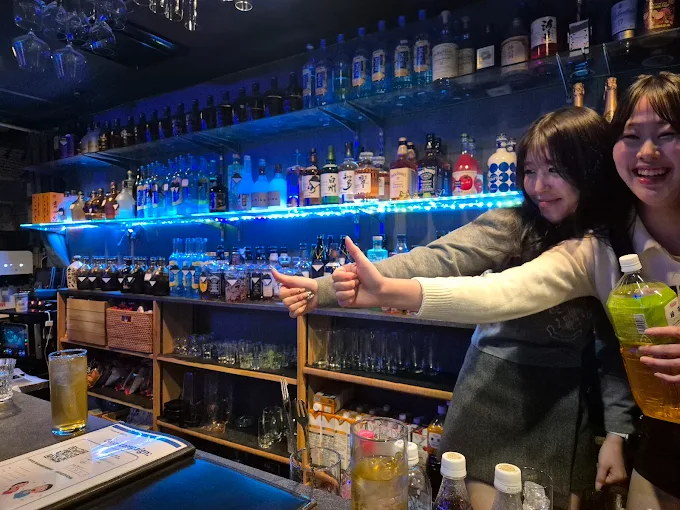
On a night that moves across Osaka, we are meant to be the last stop. Have a first round in Kitashinchi or Tenma and ride the Midosuji Line down to Minami, or eat your way through Ura Namba and Dotonbori and walk over for the next drink. Our three bars are all in Higashi-Shinsaibashi 2-chome, each only a few minutes on foot from the others, with Korean staff, K-pop playing and Korean drinks to try. You can chat with the staff across the counter while you drink, and talk with the people on the next stools often gets going naturally. Our regulars include Japanese guests who love Korea and Korean guests who love Japan, and plenty of them come on their own. Because we do not serve food at any of the three, make dinner part of the earlier areas on your route; Ura Namba, Dotonbori and Shinsekai are all good for that. Each bar holds a Google Maps rating of 4.9: HEAVEN has 2,844 reviews, 韓国バーMOON 380 and SARANG 678, counted in September 2026.
| Bar | Choose it to | What is inside |
|---|---|---|
| HEAVEN | Sing and turn the volume up | Free karaoke and darts, and a VIP room for groups. You may smoke indoors |
| 韓国バーMOON | Sit down and talk for a while | Shisha and lounge seating for unhurried conversation. Smokers are welcome here too |
| SARANG | Drink somewhere quiet, alone or with one friend | A quiet room that is fully non-smoking, has no karaoke and seats people mostly at the counter, so it is easy to visit alone |
- All three are open every night from 21:00 to 05:00, all year round, and you never need a reservation, so they fit wherever your evening happens to end. If you want to ask something beforehand, call or send an Instagram DM.
- You can settle the bill by credit card or in cash.
- HEAVEN and 韓国バーMOON allow smoking indoors; SARANG is completely smoke-free.
- Private hire and group visits are possible; ask the bar directly about the number of people.
- Guests under 20 cannot enter. If you have been drinking, do not drive; the trains above will get you home.
Walking over from Dotonbori? Directions to Higashi-Shinsaibashi from Namba and Shinsaibashi are on a separate page, and our quick picker helps you choose one of the three in a few taps.
HEAVEN
Free karaoke and darts and a VIP room: the loud finish to a night across Osaka.
5F Galaxy Building No.3, 2-4-19 Higashi-Shinsaibashi, Chuo-ku, Osaka
Open in Google MapsMOON
Shisha and lounge seats, for a long talk after a round of bar-hopping.
3F LUXE Building Naka Room, 2-8-6 Higashi-Shinsaibashi, Chuo-ku, Osaka
Open in Google MapsSARANG
Quiet, fully non-smoking, no karaoke, mostly counter seats: a calm last drink, alone or not.
Room 206, Gold Center Building, 2-8-12 Higashi-Shinsaibashi, Chuo-ku, Osaka
Open in Google Maps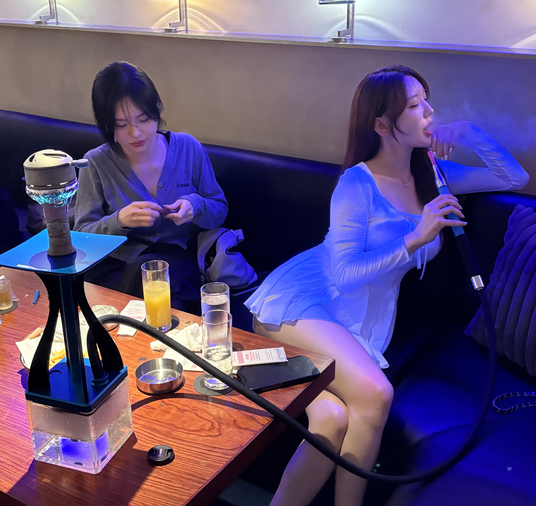
FAQ
Q. What is the difference between Minami and Kita?
They are Osaka’s two main nightlife districts. Minami, in the south, takes in Namba, Dotonbori, Soemoncho, Ura Namba and Shinsaibashi, with the giant signboards and the bar-hopping streets. Kita, in the north, covers Umeda and Kitashinchi, and Kitashinchi in particular grew as a place for business people to meet. The Midosuji Line connects the two directly.
Q. Where exactly is Ura Namba?
It is the area bounded by Sennichimae to the north, Nankai-dori to the south, Kuromon Market to the east and Takashimaya to the west, entered from the Namba side. It has been a popular bar-hopping area since around 2010.
Q. Is Kitashinchi all right for a first-time visitor?
Kitashinchi is a composed nightlife district that grew around business entertaining, with bars, clubs, snack bars and restaurants. The atmosphere differs from one place to the next, so look up the particular bar you want to visit and confirm the details with it before you go.
Q. How do I get to Tenma?
Take the JR Osaka Loop Line to Tenma Station; the izakaya and standing bars are in the streets around it. For Osaka Tenmangu, Minamimorimachi Station on the Osaka Metro Tanimachi and Sakaisuji lines is about 3 minutes away on foot.
Q. Is Shinsekai open late at night?
It depends entirely on the shop. Opening hours and closing days in Shinsekai vary from place to place, so check with the one you plan to visit before you go.
Q. Which area is best if I want to drink until morning?
Minami is the simplest base for a late night, because you can walk between Dotonbori, Ura Namba and Shinsaibashi. Each bar sets its own closing time; HEAVEN, 韓国バーMOON and SARANG in Higashi-Shinsaibashi close at 5:00.
Q. Do I need to book your bars in advance?
No. Just walk in any night between 21:00 and 05:00; the bars are open every day of the year. Phone or Instagram DM is fine if you have a question first.
Q. What is the minimum age to come in?
You must be 20 or over; guests under 20 cannot enter.
Sources and date checked: Osaka Convention and Tourism Bureau, official website OSAKA-INFO, pages on “Dotonbori”, “Soemoncho”, “Ura Namba”, “Kitashinchi”, “Tenma” and “Jan Jan Yokocho” (viewed 21 October 2026). Information about our bars is from Google Maps (as of September 2026). Opening hours of individual bars and last-train times can change, so check them before you go.